

What You'll Discover on This Heritage Tour
Al Fahidi Historical Neighbourhood
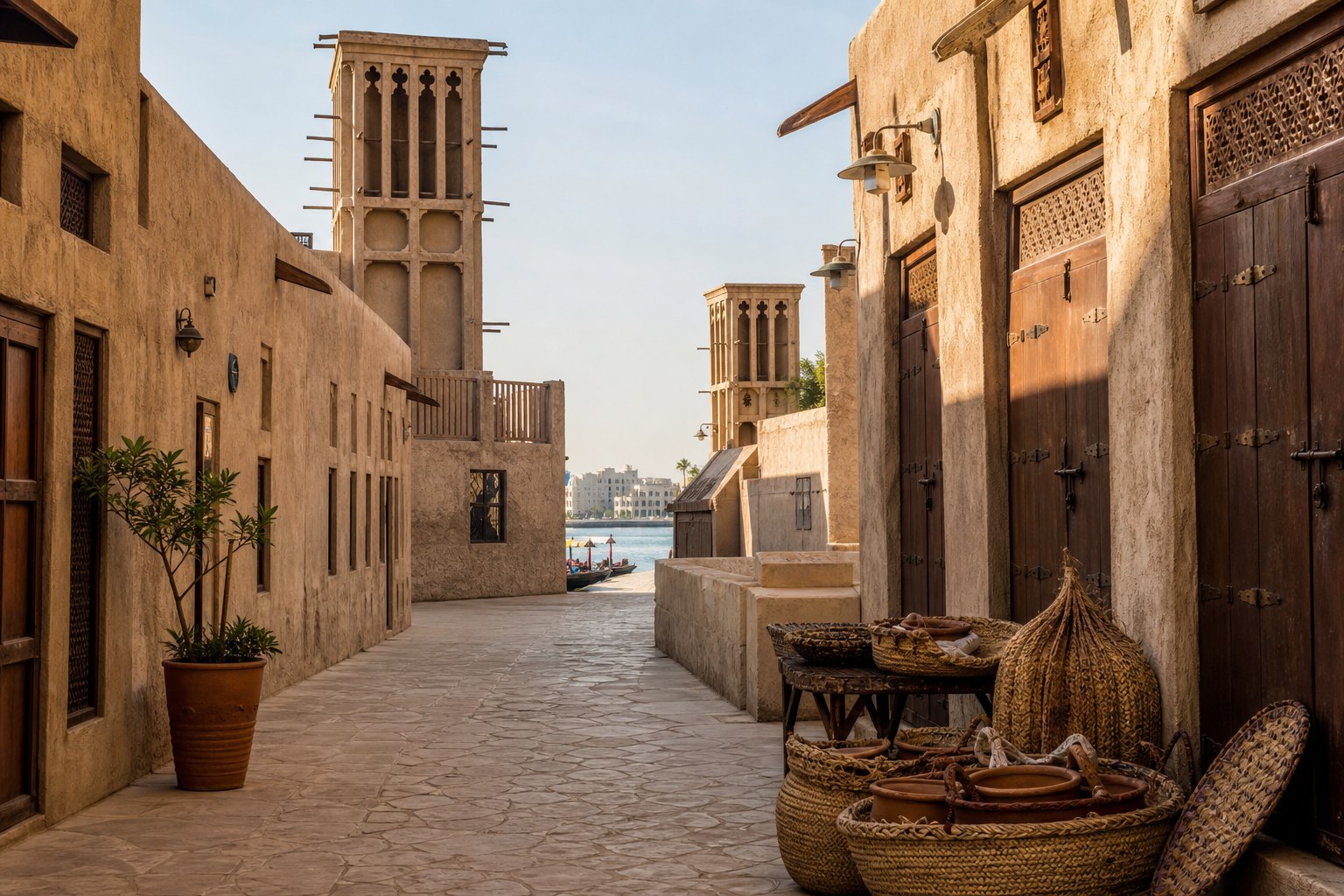
The tour begins in Al Fahidi, also known as Bastakiya, one of the oldest and best-preserved districts in the UAE. Settled by merchants in the late 1800s, this neighbourhood is a living record of pre-oil Dubai.
Walking through here, you'll find:
- Restored courtyard houses with traditional wind tower architecture, an ingenious natural cooling system designed for desert heat
- Art galleries and small museums housed in 200-year-old merchant homes
- The Sheikh Mohammed Centre for Cultural Understanding, where visitors can ask questions about Islam and Emirati life
- Quiet lanes and shaded walkways have largely remained unchanged for over a century
Every building here was designed to solve a desert challenge: coral stone walls for insulation, narrow windows for privacy, and central courtyards for airflow.
Al Fahidi Fort and Dubai Museum
Built in 1787, Al Fahidi Fort is the oldest standing structure in Dubai. Today it houses the Dubai Museum, with exhibits that bring pre-oil life vividly to life.
Inside, you'll find:
- Recreations of traditional souks, pearl diving boats, and Bedouin campsites
- Artefacts tracing Dubai's trade links with Persia, Mesopotamia, and the Indian subcontinent
- Audio-visual displays showing the city's transformation from a fishing village to a global destination
Dubai Creek: Where the City Began
The creek is where everything started. This natural inlet sheltered trading dhows from Gulf storms and gave merchants a place to build, buy, and sell. Your guide will explain how deepening the creek in the 1960s directly triggered Dubai's modern growth, and how traditional wooden dhow building continues in nearby yards today.
Abra Ride – The Most Authentic Crossing in Dubai
Before metro lines and tunnels, the Abra was how everyone crossed the creek. These traditional wooden water taxis still run today, carrying locals and visitors between Bur Dubai and Deira for just 1 dirham.
The five-minute crossing gives you views of old trading houses on one bank and the modern city on the other, two versions of Dubai, meeting at the waterline. It remains one of the most genuine and affordable experiences in the city.
Textile Souk
Covered lanes filled with silks, cottons, and cashmere from across Asia. Merchants display their goods the way traders did a century ago, stacked high, prices open to negotiation. It's a glimpse into the trading culture that made Dubai a regional commercial hub long before its modern era.
Spice Souk
The scent arrives before the stalls come into view. Cardamom, saffron, dried limes, frankincense, spices displayed in vivid, photogenic piles. Vendors share traditional uses and recipes passed through generations. This market once restocked ship captains before long sea voyages. Today, Emirati families and expat communities still shop here for the same reasons: quality, variety, and authenticity.
Gold Souk
Over 300 shops line the covered lanes of the Gold Souk, displaying jewellery crafted in 18K, 21K, and 22K gold. Indian bridal sets, Arabic designs, and contemporary pieces sit side by side. Gold is sold by weight with minimal markup, which is exactly why Dubai earned the nickname "City of Gold" long before its skyline took shape.
What's Included
- Hotel pickup and drop-off from anywhere in Dubai
- Air-conditioned transport between heritage districts
- Licensed heritage specialist guides throughout the tour
- Full access to Al Fahidi Historical Neighbourhood
- Dubai Museum entrance fee
- Traditional Abra Creek Crossing
- Guided walks through the Textile, Spice, and Gold Souks
- Complimentary bottled water
What's Not Included
- Personal purchases at souks or shops
- Meals and refreshments beyond water
- Tips for your guide, driver, or Abra operator
- Optional extras such as henna art or traditional refreshments at cultural centres
All optional add-ons can be arranged separately before your tour.
Best Time for the Old Dubai Heritage Tour
| Period | Conditions | Recommendation |
|---|---|---|
| November – March | 20–28°C, mild and pleasant | Best season, book in advance |
| April & October | 30–35°C, warming up | Morning tours preferred |
| May – September | 35–42°C, intense heat | Early morning tours only (7–10 AM) |
Time of day matters too: Morning tours (starting around 8 AM) offer cooler walking conditions, better light for photography, and less tourist traffic in the alleyways. Late afternoon tours catch golden-hour light and a livelier souk atmosphere as locals do their evening shopping.
Terms & Conditions
- Confirmed booking required before the tour date
- Pickup times confirmed 24 hours in advance
- Modest dress is required at all heritage and religious sites, with covered shoulders and knees
- Tour stops may be adjusted due to site closures or local events
- Cancellation policies vary by package, confirm at the time of booking
- Guests must respect the privacy and customs of residential heritage communities
Why Choose Sama Arabian Tours
Heritage tours live or die on the quality of the guide. Facts without context are just facts. What makes an Old Dubai tour memorable is understanding why things are the way they are.
Our heritage specialists don't recite scripts, they bring genuine knowledge of Emirati history, Islamic architecture, and the trading culture that shaped this city.
What Sets Us Apart:
- Guides with specialist training in Dubai's cultural and architectural history
- Small group sizes for genuine interaction and flexibility
- Routes built for cultural depth, not just photo opportunities
- Honest, commission-free guidance through every souk
- Respectful access to living heritage communities and neighbourhoods
Frequently Asked Questions
What Does The Old Dubai Heritage Tour Include?
The tour includes hotel pickup and drop-off, air-conditioned transport, a specialist heritage guide, Al Fahidi Historical Neighbourhood access, Dubai Museum entry, a traditional Abra creek crossing, and guided souk walks through the Textile, Spice, and Gold Souks.
How Long Does The Old Dubai Heritage Tour Take?
The tour runs approximately 4 to 5 hours, enough time to explore each site properly without feeling rushed.
Is This Tour Suitable For Families With Children?
Yes. The Abra ride, winding alleyways, and bustling souks are engaging for all ages. The walking pace is gentle and manageable for most children and older guests.
Which Heritage Sites Are Covered?
Standard stops include Al Fahidi Historical Neighbourhood, Dubai Museum at Al Fahidi Fort, Dubai Creek, the Abra crossing, Textile Souk, Spice Souk, and Gold Souk.
Is Hotel Pickup Included?
Yes, pickup and drop-off are included from hotels and residences throughout Dubai.
Are Entrance Fees Included?
Yes. Al Fahidi Historical Neighbourhood access, Dubai Museum entry, and the Abra ride are all included in the standard package.
Can I Book A Private Heritage Tour?
Yes. Private tours allow for a slower pace, deeper conversation, and a more personalised experience, ideal for history enthusiasts or small family groups.
What Should I Wear?
Lightweight, modest clothing is essential. Cover shoulders and knees, particularly in Al Fahidi and near mosques. Comfortable walking shoes are strongly recommended for uneven heritage surfaces.
Is Food Included?
Meals are not included, but complimentary water is provided throughout. Some package options include traditional Emirati refreshments at cultural centres, confirmed at booking.
Book Your Old Dubai Heritage Tour
The Dubai most visitors never see is the one that was here first, its old lanes, ancient waterways, and the trading spirit that built everything that followed.
Sama Arabian Tours is ready to take you there.
Contact us today to check availability, arrange a private tour, or ask about combining this experience with a desert safari or dhow cruise for a fuller picture of Arabian culture.
Book This Experience
Send your preferred date and group size. We will confirm availability and final details.
Book on WhatsApp